
𝐈𝐧𝐭𝐞𝐫𝐧𝐚𝐭𝐢𝐨𝐧𝐚𝐥 𝐓𝐫𝐚𝐝𝐞 𝐅𝐫𝐚𝐮𝐝, 𝐂𝐫𝐢𝐦𝐢𝐧𝐚𝐥 𝐋𝐢𝐚𝐛𝐢𝐥𝐢𝐭𝐲, 𝐚𝐧𝐝 𝐑𝐞𝐠𝐮𝐥𝐚𝐭𝐨𝐫𝐲 𝐅𝐫𝐚𝐦𝐞𝐰𝐨𝐫𝐤𝐬 𝐢𝐧 𝐂𝐫𝐨𝐬𝐬-𝐁𝐨𝐫𝐝𝐞𝐫 𝐂𝐨𝐦𝐦𝐞𝐫𝐜𝐞:
𝑬.𝑽 𝑨𝒕𝒆𝒏𝒂𝒈𝒂 & 𝑨𝒔𝒔𝒐𝒄𝒊𝒂𝒕𝒆𝒔 𝑳𝑳𝑷
6/1/2026

𝘊𝘰𝘮𝘮𝘦𝘳𝘤𝘪𝘢𝘭 𝘭𝘰𝘴𝘴 𝘢𝘭𝘰𝘯𝘦 𝘪𝘴 𝘪𝘯𝘴𝘶𝘧𝘧𝘪𝘤𝘪𝘦𝘯𝘵 𝘵𝘰 𝘦𝘴𝘵𝘢𝘣𝘭𝘪𝘴𝘩 𝘤𝘳𝘪𝘮𝘪𝘯𝘢𝘭 𝘭𝘪𝘢𝘣𝘪𝘭𝘪𝘵𝘺; 𝘵𝘩𝘦 𝘥𝘦𝘤𝘪𝘴𝘪𝘷𝘦 𝘭𝘦𝘨𝘢𝘭 𝘲𝘶𝘦𝘴𝘵𝘪𝘰𝘯 𝘪𝘴 𝘸𝘩𝘦𝘵𝘩𝘦𝘳 𝘧𝘳𝘢𝘶𝘥𝘶𝘭𝘦𝘯𝘵 𝘪𝘯𝘵𝘦𝘯𝘵 𝘢𝘯𝘥 𝘥𝘦𝘭𝘪𝘣𝘦𝘳𝘢𝘵𝘦 𝘥𝘦𝘤𝘦𝘱𝘵𝘪𝘰𝘯 𝘦𝘹𝘪𝘴𝘵𝘦𝘥 𝘧𝘳𝘰𝘮 𝘵𝘩𝘦 𝘪𝘯𝘤𝘦𝘱𝘵𝘪𝘰𝘯 𝘰𝘧 𝘵𝘩𝘦 𝘵𝘳𝘢𝘯𝘴𝘢𝘤𝘵𝘪𝘰𝘯…
Introduction
International trade depends upon trust, contractual performance, payment systems, shipping documentation, and cross-border commercial cooperation. Yet the expansion of global commerce has also created opportunities for increasingly sophisticated forms of commercial deception capable of operating simultaneously across multiple jurisdictions.
What initially appears to be an ordinary contractual dispute may, in certain circumstances, evolve into criminal fraud involving forged shipping documents, fictitious suppliers, manipulated payment instructions, cyber-enabled deception, diversion of commercial funds, or deliberate misrepresentation during cross-border transactions.
This is where international trade law intersects with criminal liability and state regulatory enforcement.
One of the most important distinctions in international commercial practice is the distinction between civil breach of contract and criminal fraud. Not every failed transaction constitutes a criminal offense. Commercial relationships may collapse because of logistical disruption, financial insolvency, customs complications, production failure, market fluctuation, or contractual misunderstanding.
However, where evidence demonstrates intentional deception or fraudulent misrepresentation from the inception of the transaction, the dispute may move beyond private commercial law into the sphere of criminal investigation and regulatory enforcement.
This transition carries significant legal consequences. The matter may then involve criminal investigation, asset tracing, regulatory intervention, international intelligence sharing, law-enforcement cooperation, and cross-border enforcement mechanisms.
In Nigeria, agencies such as the 𝐄𝐜𝐨𝐧𝐨𝐦𝐢𝐜 𝐚𝐧𝐝 𝐅𝐢𝐧𝐚𝐧𝐜𝐢𝐚𝐥 𝐂𝐫𝐢𝐦𝐞𝐬 𝐂𝐨𝐦𝐦𝐢𝐬𝐬𝐢𝐨𝐧 (“𝐄𝐅𝐂𝐂”) increasingly confront commercial fraud involving deceptive logistics arrangements, forged trade documentation, online supplier fraud, cryptocurrency-based payments, and transnational movement of commercial funds.
At the international level, institutions such as 𝐈𝐍𝐓𝐄𝐑𝐏𝐎𝐋 and cross-border investigative systems established through 𝐌𝐮𝐭𝐮𝐚𝐥 𝐋𝐞𝐠𝐚𝐥 𝐀𝐬𝐬𝐢𝐬𝐭𝐚𝐧𝐜𝐞 𝐓𝐫𝐞𝐚𝐭𝐲 (“𝐌𝐋𝐀𝐓”) frameworks have become central mechanisms for combating international commercial deception.
This article examines the criminal and regulatory dimensions of international trade disputes, focusing on the distinction between contractual breach and fraud, the role of criminal intent, 𝐄𝐅𝐂𝐂 jurisdiction, documentary fraud, international cooperation mechanisms, asset tracing, and the broader regulatory framework governing cross-border commerce.
𝐓𝐡𝐞 𝐃𝐢𝐬𝐭𝐢𝐧𝐜𝐭𝐢𝐨𝐧 𝐁𝐞𝐭𝐰𝐞𝐞𝐧 𝐁𝐫𝐞𝐚𝐜𝐡 𝐨𝐟 𝐂𝐨𝐧𝐭𝐫𝐚𝐜𝐭 𝐚𝐧𝐝 𝐂𝐫𝐢𝐦𝐢𝐧𝐚𝐥 𝐅𝐫𝐚𝐮𝐝.
One of the most important distinctions in international commercial law is the difference between civil breach of contract and criminal fraud.
This distinction determines whether the matter remains a private commercial dispute or becomes subject to criminal investigation and prosecution.
A breach of contract generally arises where a party fails to perform contractual obligations. Such failure may result from shipment delays, financial collapse, customs restrictions, failed inspection, production disruption, or broader commercial difficulties. In such circumstances, the law ordinarily treats the matter as civil rather than criminal.
The injured party may pursue remedies including damages, rescission, specific performance, or commercial arbitration.
Fraud, however, involves something fundamentally different.
The decisive legal issue is not merely whether contractual performance failed, but whether one party lacked any genuine intention to perform from the outset.
This distinction becomes especially important in international supplier disputes. Where a foreign seller creates a fictitious company, uses forged shipping documents, impersonates legitimate manufacturers, manipulates payment instructions, or receives payment without any intention of shipment, the matter may move beyond contractual breach into criminal fraud.
The legal analysis, therefore, focuses heavily upon intention.
Courts and investigative agencies frequently examine whether:
false representations were knowingly made;
documents were intentionally forged;
Payment was obtained deceptively.
Or the transaction itself was structured to mislead from inception.
This explains why commercial loss alone is insufficient to establish criminal liability. The law requires evidence of fraudulent intent.
𝐂𝐫𝐢𝐦𝐢𝐧𝐚𝐥 𝐈𝐧𝐭𝐞𝐧𝐭 𝐚𝐧𝐝 𝐭𝐡𝐞 𝐂𝐨𝐦𝐦𝐞𝐫𝐜𝐢𝐚𝐥 𝐂𝐨𝐧𝐭𝐞𝐱𝐭
Criminal intent, doctrinally described as 𝐦𝐞𝐧𝐬 𝐫𝐞𝐚, occupies a central role in distinguishing commercial disputes from economic crimes.
In cross-border trade disputes, proving fraudulent intent may be legally complex. A supplier’s failure to deliver goods does not automatically establish criminal conduct. Delays may arise from production failure, customs restrictions, financial instability, regulatory complications, or transportation disruption.
However, criminal liability may arise where evidence demonstrates deliberate deception.
Investigators frequently examine:
forged invoices or airway bills;
fictitious warehouse addresses;
manipulated payment instructions;
concealment of identity;
false representations during negotiation;
and patterns of repeated deceptive transactions.
The presence of such factors may transform an ordinary commercial dispute into a criminal matter.
This distinction is especially significant because criminal proceedings carry consequences extending far beyond contractual compensation. The matter may involve asset seizure, criminal prosecution, international investigation, extradition proceedings, and cross-border law-enforcement coordination.
Commercial parties must therefore understand that international trade disputes may operate simultaneously within both private and public legal frameworks.

𝐄𝐅𝐂𝐂 𝐉𝐮𝐫𝐢𝐬𝐝𝐢𝐜𝐭𝐢𝐨𝐧 𝐚𝐧𝐝 𝐄𝐜𝐨𝐧𝐨𝐦𝐢𝐜 𝐂𝐫𝐢𝐦𝐞𝐬 𝐢𝐧 𝐈𝐧𝐭𝐞𝐫𝐧𝐚𝐭𝐢𝐨𝐧𝐚𝐥 𝐓𝐫𝐚𝐧𝐬𝐚𝐜𝐭𝐢𝐨𝐧𝐬
In Nigeria, the 𝐄𝐜𝐨𝐧𝐨𝐦𝐢𝐜 𝐚𝐧𝐝 𝐅𝐢𝐧𝐚𝐧𝐜𝐢𝐚𝐥 𝐂𝐫𝐢𝐦𝐞𝐬 𝐂𝐨𝐦𝐦𝐢𝐬𝐬𝐢𝐨𝐧 plays a major role in investigating economic crimes connected to international commercial activity.
The Commission derives its powers principally from the𝐄𝐜𝐨𝐧𝐨𝐦𝐢𝐜 𝐚𝐧𝐝 𝐅𝐢𝐧𝐚𝐧𝐜𝐢𝐚𝐥 𝐂𝐫𝐢𝐦𝐞𝐬 𝐂𝐨𝐦𝐦𝐢𝐬𝐬𝐢𝐨𝐧 𝐀𝐜𝐭. Its jurisdiction extends to a broad range of economic and financial offenses, including obtaining by false pretence, advance fee fraud, cyber-enabled commercial deception, money laundering, cross-border financial crimes, and fraudulent commercial schemes.
In international trade disputes, 𝐄𝐅𝐂𝐂 involvement frequently arises where:
Forged trade documentation was used.
Foreign suppliers allegedly obtained payment through deception.
Commercial funds were fraudulently diverted.
Or multiple victims were targeted through coordinated commercial schemes.
The Commission may receive criminal petitions from businesses or individuals alleging fraudulent international transactions. Once investigations commence, the dispute may evolve beyond ordinary contractual enforcement.
The 𝐄𝐅𝐂𝐂 may then request banking records, trace financial transfers, obtain digital communications, coordinate with foreign authorities, or freeze assets connected to alleged criminal conduct.
The implications are substantial because the dispute no longer concerns merely contractual performance. It becomes part of the state’s broader responsibility to combat economic crime and preserve confidence within commercial systems.
𝐅𝐨𝐫𝐠𝐞𝐝 𝐒𝐡𝐢𝐩𝐩𝐢𝐧𝐠 𝐃𝐨𝐜𝐮𝐦𝐞𝐧𝐭𝐬 𝐚𝐧𝐝 𝐃𝐨𝐜𝐮𝐦𝐞𝐧𝐭𝐚𝐫𝐲 𝐅𝐫𝐚𝐮𝐝
One of the most common features of cross-border trade fraud involves the manipulation of commercial documentation.
International trade depends heavily upon documents. Banks release funds based on documentary compliance, customs authorities clear goods through documentation, and importers frequently rely upon shipping records to verify contractual performance.
This makes documentary fraud particularly dangerous.
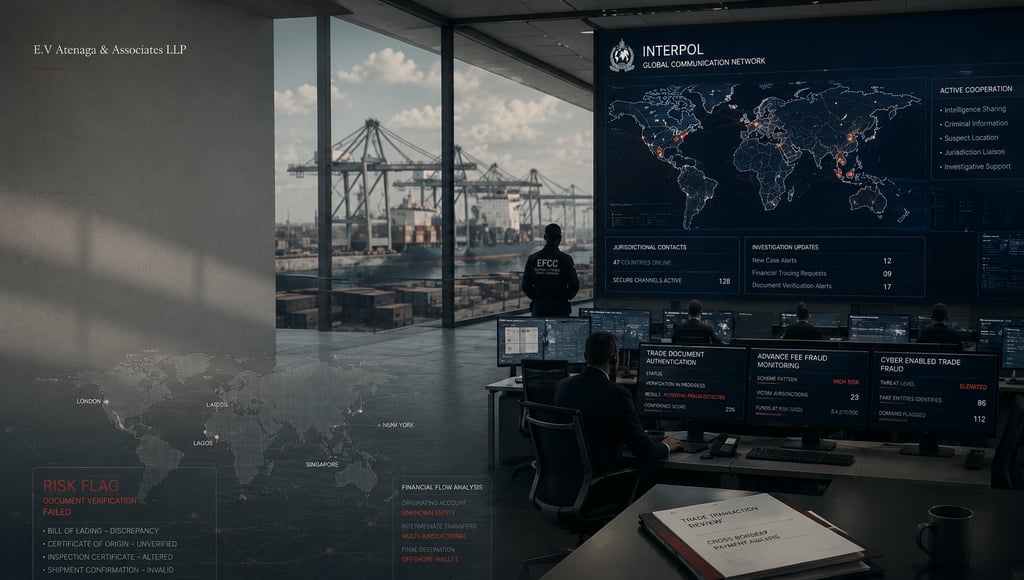
Fraudulent schemes frequently involve forged bills of lading, fake airway bills, falsified certificates of origin, manipulated inspection certificates, or counterfeit shipping confirmations.
The commercial impact may be severe. A buyer may release payment, believing shipment occurred, when no cargo actually exists. In other situations, counterfeit goods may be substituted for genuine products through manipulated logistics documentation.
This explains why sophisticated international trade practice places significant emphasis upon documentary verification, inspection rights, banking safeguards, and compliance procedures.
The legal consequences of forged trade documentation may extend beyond civil liability into criminal prosecution involving fraud, conspiracy, forgery, cybercrime, and financial crime offenses.
𝐀𝐝𝐯𝐚𝐧𝐜𝐞 𝐅𝐞𝐞 𝐅𝐫𝐚𝐮𝐝 𝐚𝐧𝐝 𝐂𝐨𝐦𝐦𝐞𝐫𝐜𝐢𝐚𝐥 𝐃𝐞𝐜𝐞𝐩𝐭𝐢𝐨𝐧
Advance fee fraud remains one of the most persistent forms of international commercial deception.
These schemes generally involve requests for advance payment based upon false promises concerning shipment, procurement opportunities, discounted supply arrangements, or international trade transactions.
Victims are often induced to transfer funds before verification of supplier identity, authentication of shipping arrangements, inspection of goods, or confirmation of manufacturing capacity.
Once payment occurs, communication frequently collapses. In many cases, the supplier identity itself may be entirely fictitious.
Modern technology has significantly increased the sophistication of such schemes. Fraudulent actors now frequently utilize professional websites, forged corporate registrations, fake logistics portals, spoofed email domains, and fabricated trade credentials.
This makes cross-border commercial verification increasingly important within international trade practice.
𝐈𝐍𝐓𝐄𝐑𝐏𝐎𝐋 𝐂𝐨𝐨𝐩𝐞𝐫𝐚𝐭𝐢𝐨𝐧 𝐚𝐧𝐝 𝐈𝐧𝐭𝐞𝐫𝐧𝐚𝐭𝐢𝐨𝐧𝐚𝐥 𝐂𝐫𝐢𝐦𝐢𝐧𝐚𝐥 𝐂𝐨𝐨𝐫𝐝𝐢𝐧𝐚𝐭𝐢𝐨𝐧
Modern international trade fraud rarely remains confined within a single jurisdiction.
Fraudulent commercial schemes frequently involve multiple countries, international banking systems, digital communications, foreign logistics providers, and cross-border movement of funds. This makes international law enforcement cooperation essential.
One of the most important institutions involved in such coordination is 𝐈𝐍𝐓𝐄𝐑𝐏𝐎𝐋.
𝐈𝐍𝐓𝐄𝐑𝐏𝐎𝐋 does not function as a global police force in the traditional sense. Rather, it operates as an international coordination network facilitating cooperation between national law enforcement agencies.
Its practical role in international trade fraud investigations may include:
intelligence sharing;
coordination of criminal information;
assistance in locating suspects;
communication between jurisdictions;
and support for cross-border investigative efforts.
The increasing digitization of international trade has intensified these challenges considerably. Cross-border fraud schemes now frequently involve cryptocurrency transfers, cyber-enabled deception, fake digital trade platforms, electronic-payment systems, and identity manipulation operating across multiple jurisdictions simultaneously.
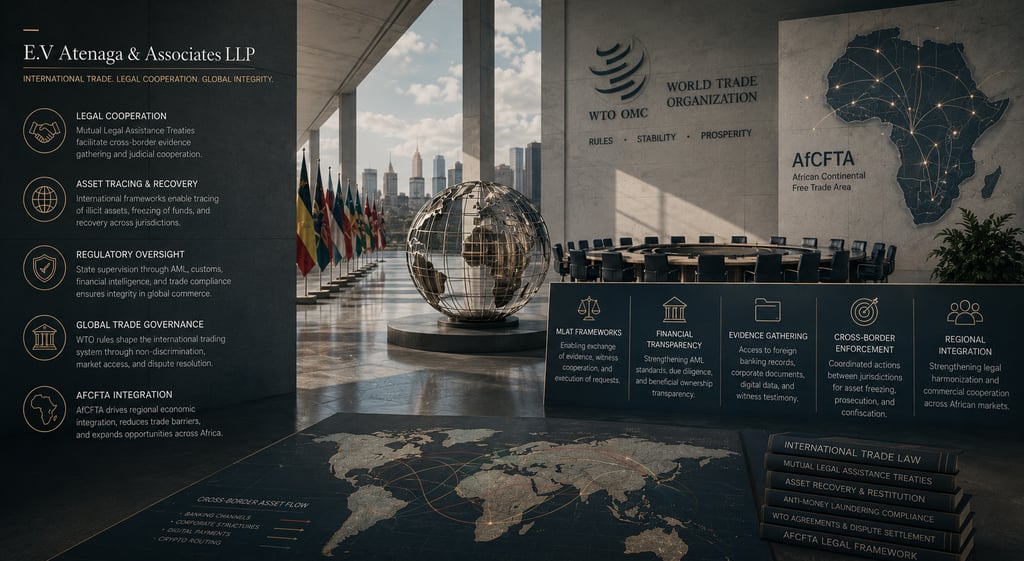
𝐌𝐮𝐭𝐮𝐚𝐥 𝐋𝐞𝐠𝐚𝐥 𝐀𝐬𝐬𝐢𝐬𝐭𝐚𝐧𝐜𝐞 𝐓𝐫𝐞𝐚𝐭𝐢𝐞𝐬 𝐚𝐧𝐝 𝐂𝐫𝐨𝐬𝐬-𝐁𝐨𝐫𝐝𝐞𝐫 𝐄𝐯𝐢𝐝𝐞𝐧𝐜𝐞 𝐆𝐚𝐭𝐡𝐞𝐫𝐢𝐧𝐠
One of the major difficulties in international criminal investigations involves obtaining evidence located abroad.
A Nigerian investigative agency may require foreign banking records, corporate registration materials, digital communications, asset-ownership records, or witness cooperation from another jurisdiction.
Domestic investigative powers alone are often insufficient to obtain such evidence.
This is where 𝐌𝐮𝐭𝐮𝐚𝐥 𝐋𝐞𝐠𝐚𝐥 𝐀𝐬𝐬𝐢𝐬𝐭𝐚𝐧𝐜𝐞 𝐓𝐫𝐞𝐚𝐭𝐢𝐞𝐬 frameworks become important.
𝐌𝐋𝐀𝐓 systems provide formal legal mechanisms through which states assist one another in criminal investigations and proceedings. These frameworks may facilitate the exchange of evidence, tracing of financial transactions, freezing of assets, execution of investigative requests, and location of suspects connected to alleged criminal conduct.
The practical significance of 𝐌𝐋𝐀𝐓𝐬 in international trade fraud investigations is substantial because modern economic crimes frequently involve rapid cross-border movement of funds and assets.
Lawyers involved in international commercial disputes must therefore understand not only domestic legal procedure, but also the international cooperation mechanisms capable of supporting cross-border investigation and enforcement.
𝐀𝐬𝐬𝐞𝐭 𝐓𝐫𝐚𝐜𝐢𝐧𝐠 𝐚𝐧𝐝 𝐑𝐞𝐜𝐨𝐯𝐞𝐫𝐲 𝐢𝐧 𝐈𝐧𝐭𝐞𝐫𝐧𝐚𝐭𝐢𝐨𝐧𝐚𝐥 𝐂𝐨𝐦𝐦𝐞𝐫𝐜𝐢𝐚𝐥 𝐅𝐫𝐚𝐮𝐝
One of the most commercially important dimensions of international fraud investigations is asset tracing.
The existence of criminal liability alone does not guarantee financial recovery. Commercial victims frequently face the practical challenge of locating assets before dissipation occurs.
This challenge becomes especially severe in cross-border fraud because funds may move rapidly through multiple jurisdictions, complex corporate structures, digital-payment systems, cryptocurrency platforms, or layered banking arrangements.
Asset tracing, therefore, becomes both a legal and investigative exercise.
Law-enforcement agencies, forensic investigators, and legal advisers may work together to identify movement of funds, beneficial ownership structures, related corporate entities, and recoverable assets connected to alleged fraudulent activity.
This process may involve banking disclosures, freezing orders, injunctive relief, regulatory cooperation, and cross-border investigative requests.
The speed of intervention often becomes commercially decisive. Once assets are transferred rapidly across jurisdictions, recovery may become significantly more difficult.
𝐑𝐞𝐠𝐮𝐥𝐚𝐭𝐨𝐫𝐲 𝐎𝐯𝐞𝐫𝐬𝐢𝐠𝐡𝐭 𝐚𝐧𝐝 𝐒𝐭𝐚𝐭𝐞 𝐒𝐮𝐩𝐞𝐫𝐯𝐢𝐬𝐢𝐨𝐧 𝐨𝐟 𝐈𝐧𝐭𝐞𝐫𝐧𝐚𝐭𝐢𝐨𝐧𝐚𝐥 𝐓𝐫𝐚𝐝𝐞
International trade is not governed solely through private contractual relationships.
States also regulate commercial activity through customs frameworks, trade regulation, financial oversight, anti-money laundering systems, administrative enforcement mechanisms, and cross-border compliance obligations.
Businesses engaged in international commerce may therefore encounter regulatory investigations, customs enforcement measures, sanctions compliance obligations, financial-reporting requirements, and anti-money laundering controls even where purely criminal fraud is not conclusively established.
This demonstrates that international trade operates simultaneously within:
private law;
criminal law;
and regulatory law.
Sophisticated international commercial practice, therefore, requires awareness not only of contractual obligations but also of the broader regulatory environment governing cross-border transactions.
𝐓𝐡𝐞 𝐖𝐓𝐎 𝐅𝐫𝐚𝐦𝐞𝐰𝐨𝐫𝐤 𝐚𝐧𝐝 𝐒𝐭𝐚𝐭𝐞 𝐑𝐞𝐠𝐮𝐥𝐚𝐭𝐢𝐨𝐧 𝐨𝐟 𝐈𝐧𝐭𝐞𝐫𝐧𝐚𝐭𝐢𝐨𝐧𝐚𝐥 𝐂𝐨𝐦𝐦𝐞𝐫𝐜𝐞
At the international level, trade relationships between states are significantly influenced by the framework established by the 𝐖𝐨𝐫𝐥𝐝 𝐓𝐫𝐚𝐝𝐞 𝐎𝐫𝐠𝐚𝐧𝐢𝐳𝐚𝐭𝐢𝐨𝐧 (“𝐖𝐓𝐎”).
The 𝐖𝐓𝐎 establishes a rules-based international trading system regulating market access, trade barriers, non-discrimination principles, subsidies, import restrictions, and dispute resolution between member states.
Although private businesses do not litigate directly before the 𝐖𝐓𝐎 in the same manner as ordinary commercial disputes, 𝐖𝐓𝐎 rules significantly influence the legal environment within which international commerce operates.
The significance of the 𝐖𝐓𝐎 framework lies in the fact that international trade is shaped not merely through private commercial agreements, but also through state regulatory conduct and international economic policy.
𝐀𝐟𝐂𝐅𝐓𝐀 𝐚𝐧𝐝 𝐑𝐞𝐠𝐢𝐨𝐧𝐚𝐥 𝐂𝐨𝐦𝐦𝐞𝐫𝐜𝐢𝐚𝐥 𝐈𝐧𝐭𝐞𝐠𝐫𝐚𝐭𝐢𝐨𝐧 𝐢𝐧 𝐀𝐟𝐫𝐢𝐜𝐚
Within the African context, the 𝐀𝐟𝐫𝐢𝐜𝐚𝐧 𝐂𝐨𝐧𝐭𝐢𝐧𝐞𝐧𝐭𝐚𝐥 𝐅𝐫𝐞𝐞 𝐓𝐫𝐚𝐝𝐞 𝐀𝐫𝐞𝐚 (“𝐀𝐟𝐂𝐅𝐓𝐀”) represents one of the most important developments in regional trade integration.
𝐀𝐟𝐂𝐅𝐓𝐀 seeks to create a more integrated African commercial market by reducing trade barriers and encouraging intra-African commerce.
For Nigerian businesses, the framework has substantial implications because it may expand commercial opportunities across African markets while simultaneously increasing the importance of sophisticated cross-border legal structures, regulatory compliance systems, and commercial-protection mechanisms.
As regional trade expands, disputes involving foreign suppliers, commercial enforcement, regulatory compliance, and cross-border fraud may become increasingly significant within African commercial practice.
𝐂𝐨𝐧𝐜𝐥𝐮𝐬𝐢𝐨𝐧
International trade disputes do not always remain confined within the boundaries of private contract law.
Where forged documentation, intentional deception, fraudulent payment schemes, or deliberate commercial misrepresentation emerge, the dispute may evolve into a matter involving criminal liability, regulatory enforcement, international cooperation mechanisms, and cross-border investigation.
The distinction between breach of contract and fraud, therefore, occupies a central position within international commercial law. Commercial failure alone does not establish criminality. However, where evidence demonstrates fraudulent intent from the inception of the transaction, institutions such as the𝐄𝐅𝐂𝐂, 𝐈𝐍𝐓𝐄𝐑𝐏𝐎𝐋, 𝐚𝐧𝐝 𝐜𝐫𝐨𝐬𝐬-𝐛𝐨𝐫𝐝𝐞𝐫 𝐢𝐧𝐯𝐞𝐬𝐭𝐢𝐠𝐚𝐭𝐢𝐯𝐞 𝐟𝐫𝐚𝐦𝐞𝐰𝐨𝐫𝐤𝐬 𝐞𝐬𝐭𝐚𝐛𝐥𝐢𝐬𝐡𝐞𝐝 𝐭𝐡𝐫𝐨𝐮𝐠𝐡 𝐌𝐋𝐀𝐓 𝐬𝐲𝐬𝐭𝐞𝐦𝐬 may become actively involved.
At the same time, international commerce also operates within broader regulatory systems established through institutions such as the 𝐖𝐓𝐎 and regional integration frameworks such as 𝐀𝐟𝐂𝐅𝐓𝐀.
Modern international trade is therefore governed simultaneously through private contractual law, criminal enforcement systems, and state regulatory frameworks.
For businesses engaged in cross-border commerce, understanding these overlapping systems is essential because global trade ultimately depends not merely upon private agreements between parties, but also upon the ability of states and international institutions to regulate markets, combat fraud, and preserve confidence within international commercial systems..
References and Authorities
African Continental Free Trade Area
Economic and Financial Crimes Commission Act
Economic and Financial Crimes Commission
INTERPOL
Mutual Legal Assistance Treaty (MLAT) Frameworks
World Trade Organization
© 2026 𝑬.𝑽 𝑨𝒕𝒆𝒏𝒂𝒈𝒂 & 𝑨𝒔𝒔𝒐𝒄𝒊𝒂𝒕𝒆𝒔 𝑳𝑳𝑷. 𝑨𝒍𝒍 𝒓𝒊𝒈𝒉𝒕𝒔 𝒓𝒆𝒔𝒆𝒓𝒗𝒆𝒅.

Visit Our Office
Office Address
E.V Atenaga & Associates LLP, Benin Sapele Rd, Ikpoba Okha, Benin City 300105, Edo, Nigeria.
Contact Us
+234 -708 - 562 - 8297
info@evallp.com
© 2026 E.V Atenaga & Associates LLP. All Rights Reserved.
MODERN LEGAL SOLUTIONS FOR A BORDERLESS WORLD